

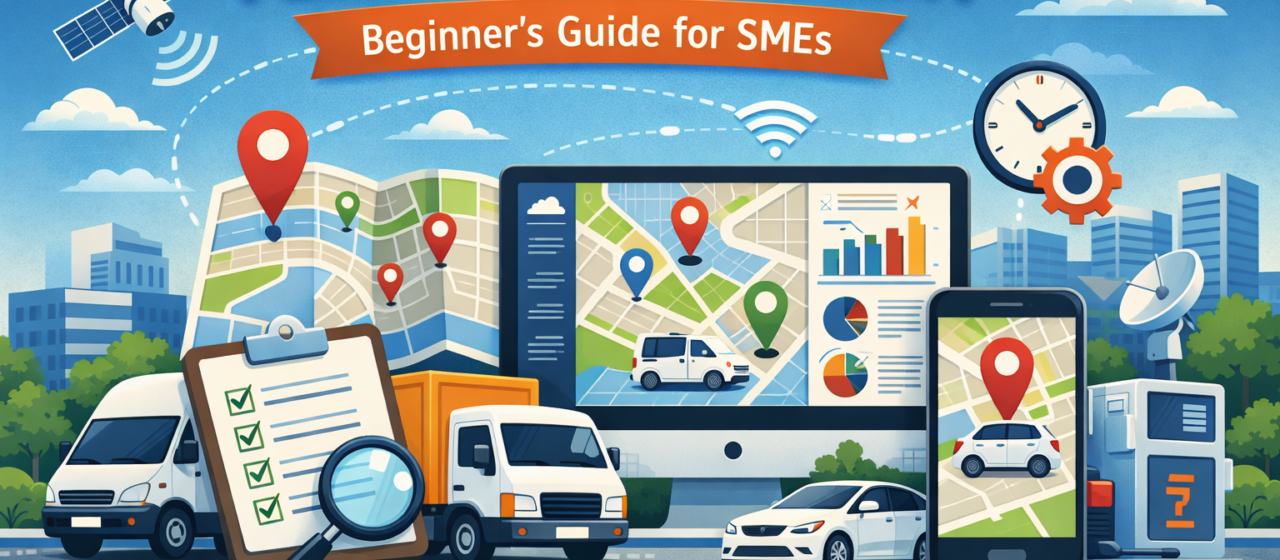
Fleet Management 101:
Beginner’s Guide for SMEs
How small and mid-sized businesses can cut costs, eliminate guesswork, and gain full visibility over their fleets — without enterprise budgets.
Introduction
For most small and mid-sized enterprises in India, running a fleet of vehicles feels like managing chaos with a spreadsheet. Vehicles leave in the morning, and what happens between departure and return is largely invisible — drivers take unplanned routes, fuel slips pile up on a desk, and customer calls about late deliveries go unanswered. It doesn’t have to be this way.
Fleet management isn’t just a luxury for logistics giants with hundreds of trucks. It’s a discipline that every SME operating even three or four commercial vehicles needs to take seriously. The difference between a business that grows sustainably and one that bleeds money quietly is often found in how well it understands and controls its vehicles, its drivers, and its fuel.
This guide is written specifically for SME owners, operations managers, and business decision-makers who are either just starting to think about fleet management or are tired of patching together manual processes that don’t scale. We’ll walk through the real challenges, the measurable benefits of going digital, and the features that actually matter when choosing a solution.
“The average SME fleet loses 15–20% of its operational budget to inefficiencies that a basic tracking system could eliminate in the first 90 days.”
Common Challenges SME Fleet Operators Face
Before you can solve a problem, you need to name it. Fleet management issues for SMEs tend to cluster around the same recurring pain points, and understanding them is the first step toward building a better system.
Driver Accountability
Without tracking, there’s no way to know if a driver took a detour, stopped for personal errands, or reported inaccurate delivery times. Disputes arise, and without data, they’re hard to resolve.
Fuel Wastage
Fuel is often the single largest operating cost for a fleet. Unofficial top-ups, idling engines, and aggressive driving silently drain margins — and manual logbooks rarely capture the full picture.
Poor Visibility
Customers expect real-time updates. Without vehicle tracking, every “Where is my delivery?” call becomes an embarrassing guessing game for your operations team.
Maintenance Gaps
Reactive maintenance — fixing vehicles only after they break down — is far more expensive than scheduled servicing. Breakdowns mid-route cause delays, customer dissatisfaction, and repair bills that balloon under pressure.
Compliance Risk
Managing driver licences, vehicle insurance renewals, fitness certificates, and permit validity manually across even 10 vehicles is a compliance risk waiting to become a legal problem.
No Performance Data
Without reporting, management decisions rely on instinct rather than data. You can’t optimize routes you can’t measure, and you can’t hold teams accountable for numbers you don’t track.
The common thread across all these challenges is information gap. SMEs that rely on manual processes are essentially flying blind — and in a competitive market, that’s an increasingly dangerous position.
Benefits of Adopting Fleet Management Software
Modern fleet management platforms don’t require a large IT team to implement or a six-figure budget to run. For SMEs, the right software pays for itself quickly — typically within six months — through measurable savings in fuel, maintenance, and operational time.
Real-Time Visibility Changes Everything
When you can see where every vehicle is at any moment, your entire operation changes. Dispatchers can re-route vehicles around traffic. Customers get accurate ETAs. Managers can confirm that drivers are on the right routes without making phone calls. The cumulative effect of this visibility compounds over time — better data leads to better decisions, which lead to better outcomes.
Cost Reduction Is Measurable and Fast
Fuel monitoring alone often justifies the entire investment in fleet software. By tracking idling time, speeding, and fuel fill-up patterns, businesses consistently identify 10–20% savings within the first quarter. Add maintenance scheduling — which prevents costly breakdowns — and the numbers become even more compelling. For a fleet of 15 vehicles spending ₹8 lakhs a month on fuel, a 15% saving is ₹1.2 lakhs back into your business every month.
Driver Performance Improves with Accountability
This isn’t about surveillance — it’s about fairness. When all drivers are measured on the same objective criteria (speed, braking, idle time, adherence to routes), performance conversations become data-driven rather than personal. Good drivers get recognized; unsafe behaviours get corrected before they become accidents. Insurance premiums tend to drop as driver safety scores improve, adding another layer of financial benefit.
Key Features SMEs Should Look For
Not all fleet management software is built for SMEs. Enterprise platforms can be over-engineered, expensive, and require dedicated implementation teams. When evaluating options, focus on these essential capabilities that deliver value from day one.
-
📍
Real-Time GPS Tracking Live vehicle location on a map, updated every 30–60 seconds. Look for platforms that show speed, direction, and stop history. Geo-fence alerts (notifications when vehicles enter or leave defined zones) add another layer of control.
-
⛽
Fuel Monitoring & Reports Integration with fuel sensors or fuel card data to track consumption per vehicle, per trip, and per driver. The system should flag anomalies — sudden drops in fuel level, excessive idling, fill-ups that don’t match odometer readings.
-
📊
Reporting Dashboard A clear, visual dashboard showing daily trip summaries, distance covered, trip count, fuel consumed, and driver activity. Exportable reports (Excel/PDF) save hours of manual compilation every month.
-
🔔
Alerts & Notifications Automated alerts for speeding, harsh braking, vehicle stoppages outside planned locations, geo-fence violations, and upcoming maintenance milestones. These push to your phone or email in real time.
-
🔧
Maintenance Scheduling Set service reminders based on mileage or date. Track service history per vehicle. Get alerts before licences, insurance, or fitness certificates expire. Prevents the expensive surprises that come from reactive maintenance.
-
📱
Mobile App Access Business owners and managers shouldn’t have to be at a desktop to know what’s happening. A mobile app lets you check live location, receive alerts, and review trip history from anywhere.
-
👤
Driver Management Maintain driver profiles, licence expiry dates, trip assignment history, and performance scores. Some platforms include driver behaviour scoring based on speed, braking, and idling — useful for safety-focused incentive programmes.
-
🔗
ERP / TMS Integration For businesses already running an ERP or transport management system, look for fleet software that can sync trip data, vehicle costs, and driver records — eliminating double-entry and giving you a single source of truth.
The best platforms for SMEs are those that offer these features without requiring weeks of onboarding. If a vendor can’t get you live and tracking within a few days, that’s a red flag about the complexity (and support) you’ll face down the road.
Conclusion: The Right Partner Makes the Difference
Fleet management is no longer a problem that can be solved with a WhatsApp group and an Excel sheet. As fuel prices rise, customer expectations increase, and compliance requirements tighten, the SMEs that invest in smart systems today will have a significant operational advantage over those that wait.
The good news is that getting started doesn’t require a massive investment or a long implementation timeline. The right fleet management software — purpose-built for the scale and budget of an SME — can be up and running in days, delivering visible ROI within the first month.
At SKM Inc., we’ve spent years working with SMEs across India to design fleet management solutions that are practical, affordable, and genuinely effective. Whether you’re running 5 vehicles or 50, we understand the operational realities you face — and we build tools that solve real problems, not theoretical ones. If you’re ready to take control of your fleet, we’d love to show you what’s possible.
Ready to Take Control of Your Fleet?
Talk to our team for a free consultation. We’ll assess your current setup and show you exactly how much you could save.
Get a Free Demo →
Comments